Pre 1800’s-
The Moorish Cannon
1. The first metal cannon were the pot-de-fer. A bolt like projectile was loaded into the cannon, most likely wrapped in leather to give the projectile more force. It was set off through a touch hole with a heated wire.
2. The weapon wasn’t used very regularly, as it was bulky and wasn’t practical to move in battle. The first time cannons were ever truly used in European warfare was in the Hundred Years War alongside similarly designed cannons.
3. These cannons were not used often, but played roles in wars like the Hundred Years war which was waged between two English and French groups. This war played a huge role in the reconstruction of the social structure in Europe.
 The Atlatl
1. The atlatl is one of the earliest recored "cannons". All it basically was was a wooden device that a human would hold to launch their spears forward to produce a faster speed and a longer throwing distance.
2. The weapon did not cost anything to make, because at the times it was used currency was not in existence. They were all handcrafted from materials found in nature.
3. These launchers provided early humans with many things. It allowed them to kill larger animals from further distances, thus allowing them to eat and survive.
The Atlatl
1. The atlatl is one of the earliest recored "cannons". All it basically was was a wooden device that a human would hold to launch their spears forward to produce a faster speed and a longer throwing distance.
2. The weapon did not cost anything to make, because at the times it was used currency was not in existence. They were all handcrafted from materials found in nature.
3. These launchers provided early humans with many things. It allowed them to kill larger animals from further distances, thus allowing them to eat and survive.  1800’s-1900’s-
British Mark V
1800’s-1900’s-
British Mark V1. These cannons were first used in WW1. It had many new features such as an unditching beam which could be used to extract itself from shell craters and trenches. 400 in total were made. It could hold a crew of 8, and was referred to as male and female, to distinguish two different designs of the cannons.
2. This was a late contender in WW1, so it didn’t have much impact economically. Even though it wasn’t used for a majority of the war, it ultimately helped conserve money when it came to soldiers’ rounds because the cannons could take out more enemy troops at one time.
3. With its’ help in WW1, it most definitely helped and had a social impact. It helped defend Allied Europe from the Nazi army, and if the Allies had lost the First World War our world would most likely be very different today.
 Voisin Cannon
1. This was the first cannon used in an aircraft. It was simply mounted at the front of the aircraft, and was considered the experimental gateway for aircraft cannons to come.
2. This cannon was only a showcase item, but allowed for aircraft weapons to come.
3. It didn't provide much social impact, but only in the sense that it opened the door for a vital piece of technology we use even today.
Voisin Cannon
1. This was the first cannon used in an aircraft. It was simply mounted at the front of the aircraft, and was considered the experimental gateway for aircraft cannons to come.
2. This cannon was only a showcase item, but allowed for aircraft weapons to come.
3. It didn't provide much social impact, but only in the sense that it opened the door for a vital piece of technology we use even today.  1900’s-Modern World-
Titan Missile Silo
1900’s-Modern World-
Titan Missile Silo 1. Rockets are a very heavily used in warfare today. The titan missile program, which is now currently inactive, launched large nuclear rockets out of silos in deserted areas across the country. The chambers were designed for technicians to be able to launch rockets based on coordinates entered into the computer. If the missile launching station was attacked they were designed to last long enough for the technicians inside to return fire before dying.
2. These missile launching stations were very expensive to build, along with the ammunition they used. Although the price was quite high to manufacture these, they were hardly ever used so they didn’t waste very many funds on the devices.
3. These missile silos were the main cause of the Cuban missile crisis and the nuclear conflict between the US and Russia. During the late 1900’s the US was very fearful of a nuclear attack. Today many Middle East countries are beginning to acquire nuclear technology, and the threat is beginning to increase once again.
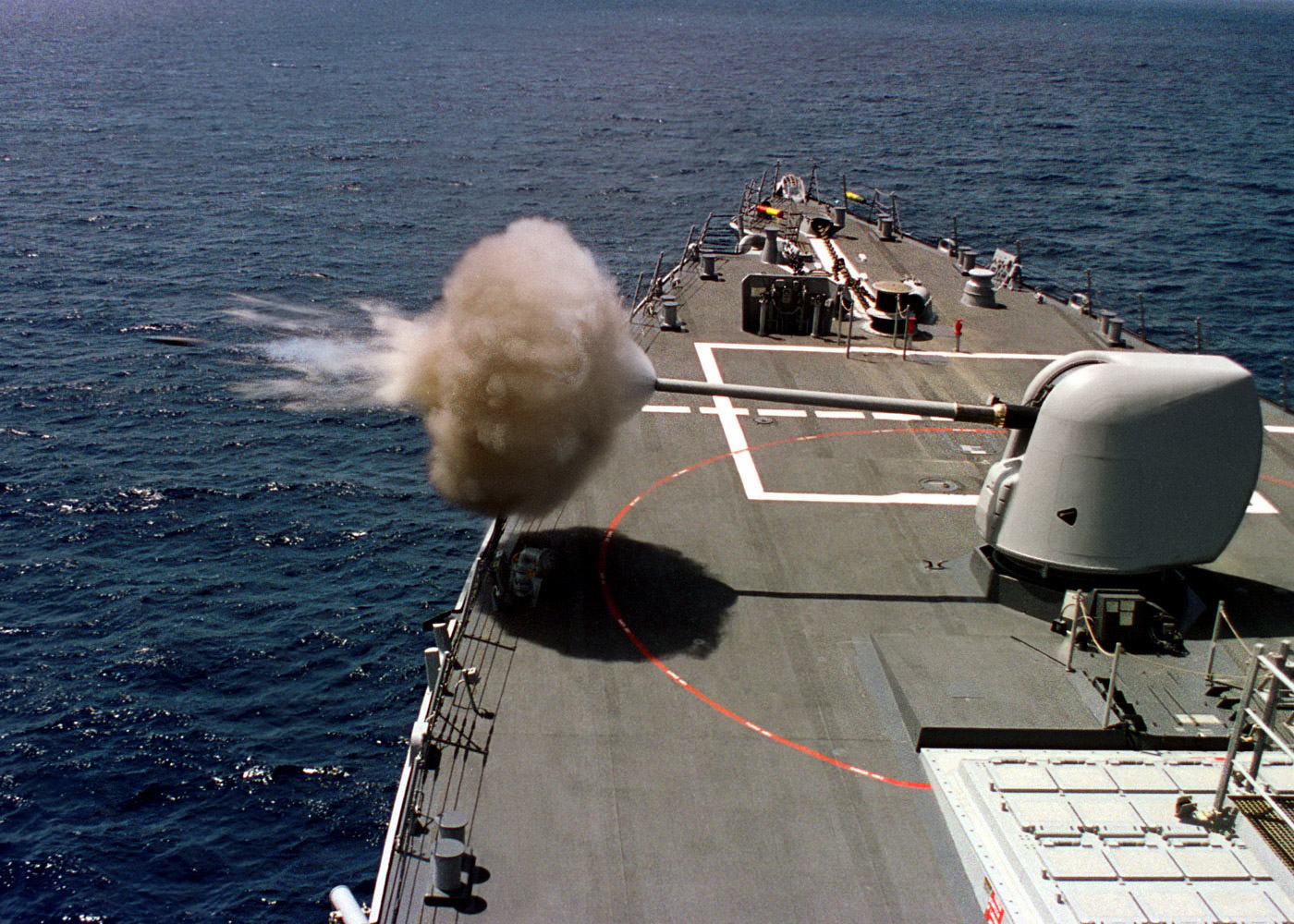
 Mark 45
1. The mark 45 is a mounted cannon that is often equipped to aircraft carriers. They are controlled by computers, and are used as an anti-aircraft gun.
2. The mark 45 protects vital pieces of technology, therefore saving money. Protecting these pieces of technology leaves more money to be spent for other things.
3. This gun has a major influence in modern warfare, but not many battles take place in the open water anymore.
Mark 45
1. The mark 45 is a mounted cannon that is often equipped to aircraft carriers. They are controlled by computers, and are used as an anti-aircraft gun.
2. The mark 45 protects vital pieces of technology, therefore saving money. Protecting these pieces of technology leaves more money to be spent for other things.
3. This gun has a major influence in modern warfare, but not many battles take place in the open water anymore.